
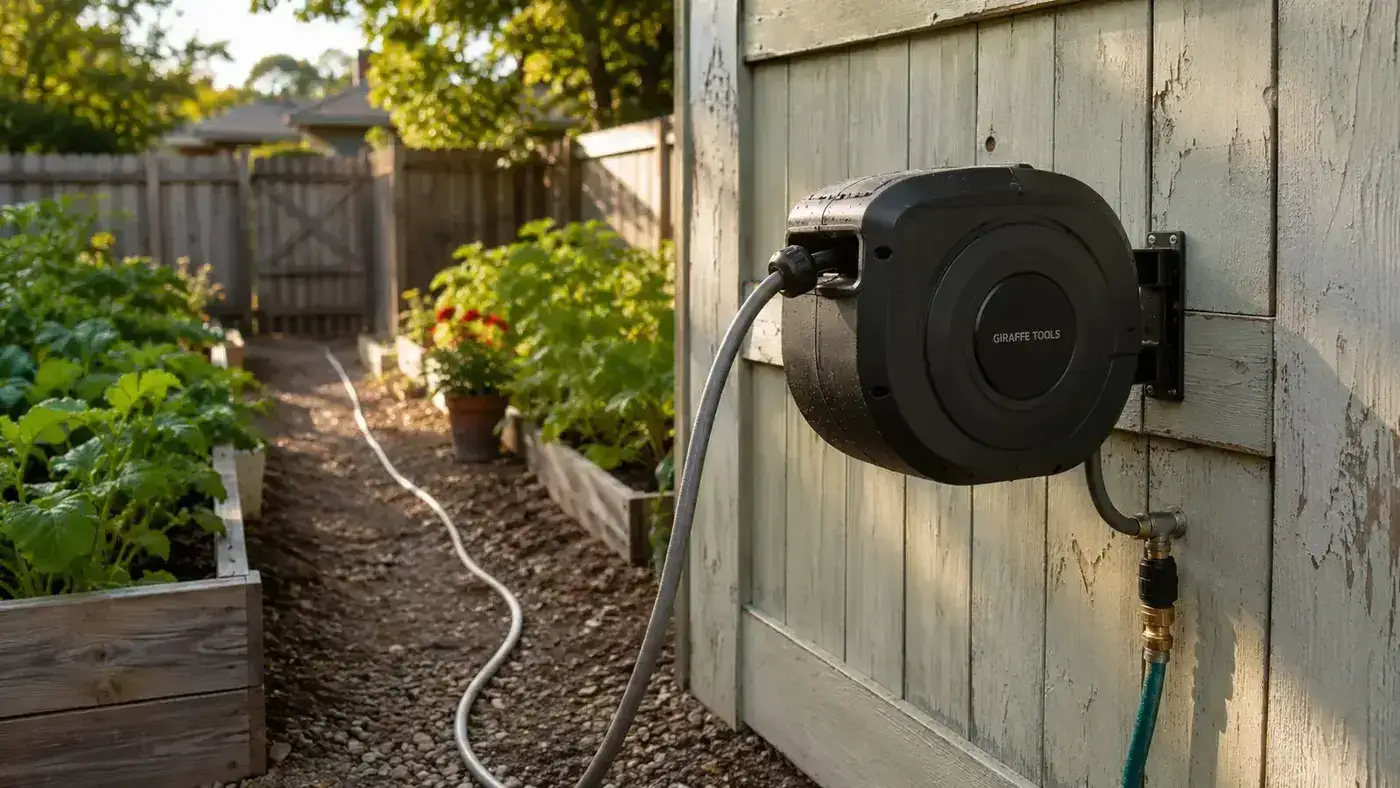
When someone asks me whether the Ayleid retractable hose reel is worth buying, my honest first question back is: what wall are you mounting it on? Because the hose itself is good. The rubber hybrid hose is genuinely kink-free, the 9-pattern sprayer works, the any-length lock is convenient once you get it dialed in. None of that is the sticking point. What the glowing reviews don't tell you is that this thing is a wall-mount appliance, and if your wall situation isn't right, the whole product becomes a frustrating project instead of a simple upgrade.
I'm Ray Halloran. I've been gardening the same half-acre in western Pennsylvania for going on 28 years, and my knees and lower back have been making their opinions known for about the last eight of them. A retractable reel sounded like exactly what I needed: no more hose coiled on the ground waiting to catch my foot on the way to the back gate. I did my research, bought the Ayleid, mounted it, and have been using it ever since. Here's what the marketing copy skips over, what a 4.2-star average actually means in practice, and the short list of who should genuinely look elsewhere.
The Quick Verdict
A solid retractable reel with a genuinely good hose, but the installation asks more of you than the box suggests, and the retraction speed will test your patience if you're used to a spring-snap return.
Amazon Check Today's Price →Still dragging a tangled hose across the yard? Here's today's price on the Ayleid.
If your wall situation is right and you're ready for a permanent watering setup, the Ayleid 100ft retractable reel is a real upgrade. Check Amazon for current pricing and availability before the season gets busy.
Amazon Check Today's Price on Amazon →What I Mean By 'The Wall Situation'
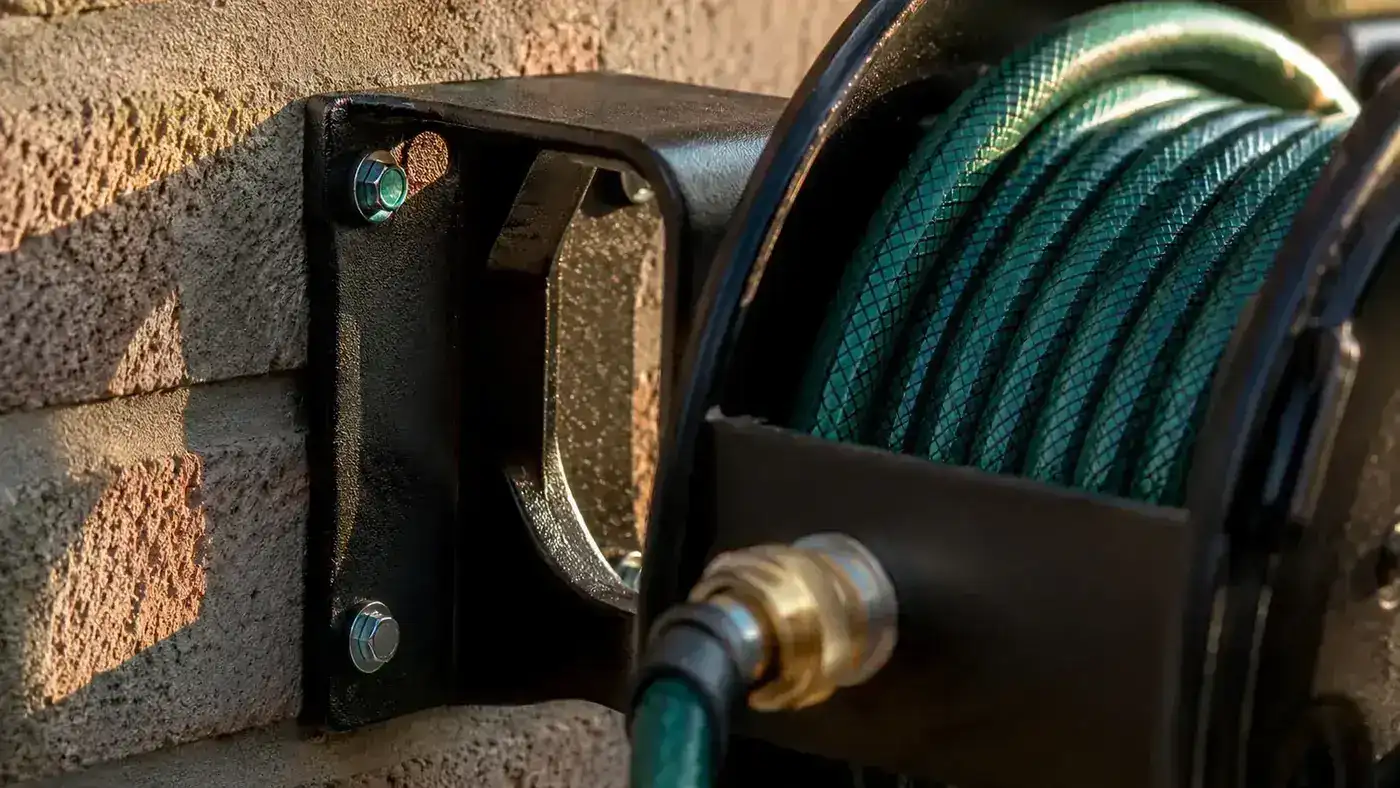
The Ayleid mounts on four lag screws or through-bolts. The bracket itself is solid and well-made. But the product weighs about 12 pounds before you load it with 100 feet of water-filled hose, and a full 100-foot hose holds a surprising amount of water. Once that hose fills up and you add the reel, you are putting real weight on four anchor points. The instructions say to mount into studs or use masonry anchors in concrete. That sentence is doing a lot of work.
I mounted mine into a stud wall on my garage exterior, which worked fine. But I watched my neighbor try to mount his into vinyl siding over OSB without hitting a stud, and it pulled right off the wall within three weeks. Vinyl siding is not a suitable mounting surface, full stop. Hollow wood fences, cedar fence panels, aged or soft wood, thin metal sheds, and T-111 siding are all situations where you need to either find solid structure behind the surface or pick a different spot. If you're renting, check with your landlord before you drill. If your spigot is on a brick or stucco wall, plan on buying masonry anchors and a hammer drill, because neither comes in the box.
None of this is a defect in the product. It's a wall-mount product that needs a solid wall. But the box doesn't walk you through this, and a lot of the one-star and two-star reviews are people who mounted into inadequate surfaces. A 4.2-star average with over 4,000 reviews tells you the product works well for most buyers. It also tells you that a meaningful number of buyers ran into trouble, and wall prep is the most common source of that trouble.
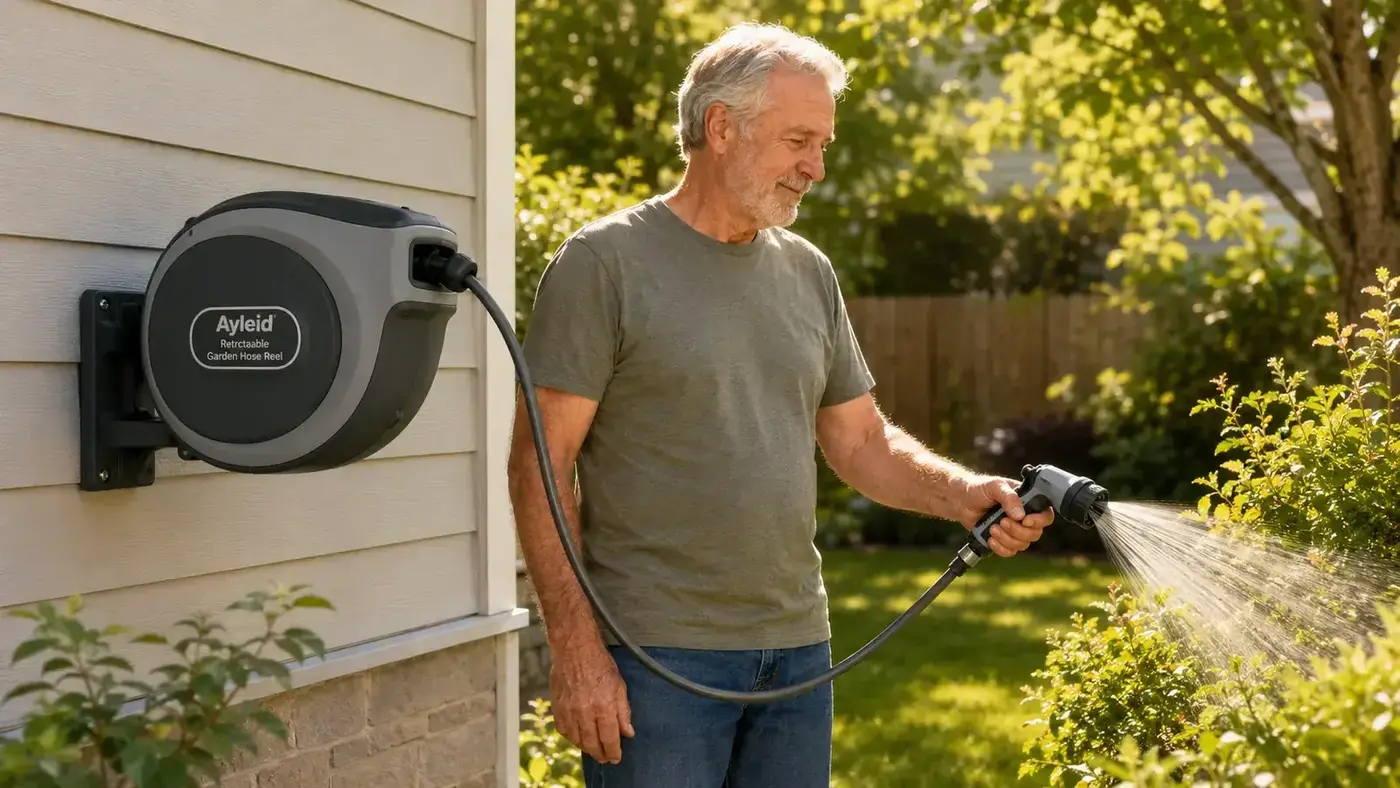
The Installation Itself: Plan for 60 to 90 Minutes
The box says it takes about 20 to 30 minutes to install. I'll be honest: on a good day with the right tools already in hand, someone who is handy might hit that number. For the rest of us, 60 to 90 minutes is more realistic. Here's what the time actually goes into: finding your studs or prepping masonry anchor holes, leveling the bracket (the reel binds if it's even a few degrees off level, which matters for retraction), attaching the leader hose to your spigot and making sure the connection doesn't leak, threading the main hose through the reel body, and adjusting the internal tension spring to get the retraction speed you want.
That spring tension step is the one that trips people up most. The reel ships with the spring set to a default tension, which in my experience is a little too aggressive for the first few feet of hose pull. You can adjust it by rewinding the spring manually, but the instructions on this are thin. I ended up watching a video online to understand exactly what I was doing before I touched the spring. If you have arthritis in your hands or limited grip strength, the spring adjustment step is genuinely awkward and may require a second set of hands. Plan for that.
The tools you actually need for the job: a stud finder, a drill with a 3/16 inch bit for pilot holes, a level, an adjustable wrench or channel-lock pliers for the spigot connection, and Teflon tape. None of those are exotic, but having them all gathered before you start keeps the job from stretching into a second afternoon. If you are mounting into masonry, add a hammer drill and a masonry bit to the list, and expect the noise and dust that comes with that.
The Retraction Speed: This Is Not a Spring-Snap Reel
If you have ever used a tape measure with a fast retract spring, or the cheap retractable reels you see on gas station hoses, you might expect the Ayleid to snap the hose back quickly when you release it. It does not work that way, and this is by design. The slow auto-return is a feature, not a bug. Ayleid specifically engineered the reel to retract slowly and evenly so the hose coils back without tangling or piling up on one side of the drum. A fast retract would whip a 100-foot rubber hybrid hose around badly and cause kinks.
That said, slow is slow. When I release 80 feet of hose and walk back to the spigot, I have about 45 seconds of waiting while the hose winds back in. Some buyers find this deeply satisfying. Others find it aggravating and start helping the hose along by walking it back toward the reel, which defeats the auto-retract entirely. If you are coming from a hose box or a hand-crank reel, slow auto-retract feels luxurious. If you are coming from a faster retractable reel, you may feel like this one is dragging.
Slow auto-retract is a feature, not a bug. It's just not for everyone, and knowing that before you buy saves you from being the person who returns it after a week.
The Any-Length Lock: Genuinely Useful, With One Catch
The any-length lock is one of the better ideas on this reel. You pull the hose to the length you want, give a slight tug to engage the lock, and the hose stays put without you holding tension. This is a real quality-of-life feature, especially if your hands aren't great. You can set the hose length for your front bed, water, and then release the lock to let the hose wind back without going back to adjust anything.
The catch is that the lock engage-and-release takes a little practice to get consistent. When I first set it up, I engaged the lock but then accidentally released it when I shifted my grip on the hose. The lock mechanism works by a specific pull angle, and until your muscle memory knows that angle, you may find yourself chasing a retracting hose across the yard more than once. After a week or two of use it becomes second nature. But it is not intuitive out of the box, and the instructions do not explain the feel of it well.
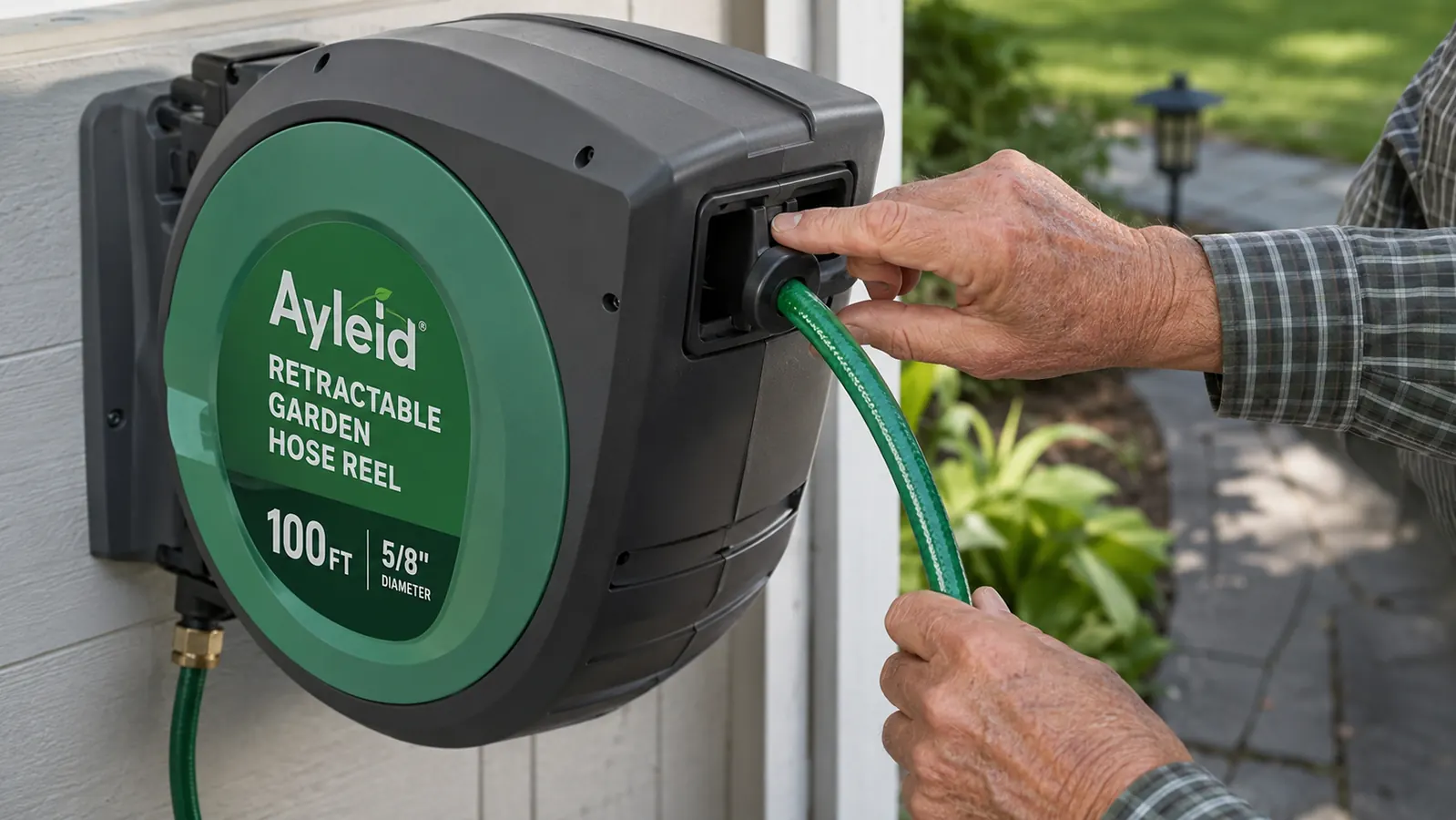
Honest Look at That 4.2 Rating
Over 4,000 reviews and a 4.2 average is a genuine signal of a product that mostly works well. For context, most of the Suncast and Liberty retractable reels in the same price range sit at 3.9 to 4.1 with similar review counts, so Ayleid is slightly above the midfield. But 4.2 is not 4.6, and it is worth asking what drags the score down. Reading through the lower reviews paints a pretty consistent picture: mounting into wrong surfaces (covered above), the leader hose connection leaking at the spigot on some units, and the retraction gradually weakening after two or three seasons of heavy use as the internal spring loses tension.
The leaking connection is worth watching. When I first installed mine, I got a slow drip where the leader hose meets my spigot threads. A few wraps of Teflon tape fixed it in about three minutes and it has not leaked since. That is a normal plumbing step, but it is not mentioned in the instructions, and first-time buyers who expect a zero-leak connection right out of the box will be annoyed. Wrap your threads before you finalize the connection and you will likely never have the issue.
The spring tension issue over time is real but manageable. The 24-month warranty covers manufacturer defects, but spring tension loss from wear and tear is not typically a warranty item. If you are putting this reel through heavy daily use in a commercial or semi-commercial setting, it may not last as long as it would for a home gardener watering three or four times a week. And at this price point, it is not a throwaway purchase. The expectation should be four to five seasons of home-use life, which is realistic if it is installed correctly on a solid wall and not pushed beyond its design load.
One thing the reviews do not mention enough: the 9-pattern sprayer included with the Ayleid is genuinely better than the throw-in sprayers that ship with most hose reels. The thumb-slide flow control gives you a smooth range from a trickle to full pressure without snapping between settings. For watering seedlings or anything delicate, that matters more than it sounds. It is a small thing, but small things add up when you are using a tool every other day for seven months.
The Rubber Hybrid Hose: What Makes It Different
Most retractable reels ship with a flat, lightweight polyurethane hose because it is easy to coil tightly onto a drum. The Ayleid ships with a rubber hybrid hose, which is heavier and more flexible across a wider temperature range. The practical difference is that the Ayleid hose behaves like a regular garden hose when you pull it out: it lies flat, it does not try to curl back into a circle, and in cool weather it stays pliable instead of going stiff. A straight polyurethane hose will kink the moment it gets cold and bends at a sharp angle.
The tradeoff for that heavier hose is that it puts more load on the retraction spring. This is part of why the retraction is slow: the spring is working against a denser hose. It is also why mounting into a solid surface matters more with this reel than with a lighter hose reel. Do not let anyone tell you a rubber hybrid hose and a polyurethane hose retract the same way. They do not, and Ayleid built the spring tension around the hybrid hose specifically.
What I Liked
- Rubber hybrid hose genuinely resists kinking at all angles and stays flexible in cool weather
- Any-length lock is a real quality-of-life feature once your hands learn the pull angle
- 9-pattern sprayer with thumb-slide flow control is meaningfully better than typical throw-in sprayers
- 24-month warranty covers the primary failure mode (spring and mechanism defects)
- Slow auto-retract means the hose winds back evenly without pile-up or tangling
Where It Falls Short
- Installation is significantly more involved than the box implies, especially on masonry or tricky walls
- Not compatible with vinyl siding, hollow fences, thin sheds, or any surface without solid backing
- Retraction is genuinely slow; impatient users will find themselves manually guiding the hose back
- Leader hose-to-spigot connection may require Teflon tape, which is not included or mentioned
- Spring tension adjustment is poorly documented and awkward for anyone with limited hand strength
- Spring tension can weaken over two to three seasons under heavy daily use
Who This Is For
The Ayleid retractable reel is a good fit if you have a solid exterior wall, a spigot within about 6 feet of where the reel will hang, and patience for a proper one-afternoon installation. It rewards the gardener who wants a permanent, tidy watering setup and is willing to put in the time to get it right. If bending down to pick up and uncoil a hose is genuinely painful for your back or knees, and you have the right wall, this reel removes that problem entirely. The hose stays off the ground, it unwinds smoothly, and it comes back when you let it go. For a gardener with a good mounting spot and a body that objects to wrestling with hose coils, this is a real upgrade.
Who Should Skip It
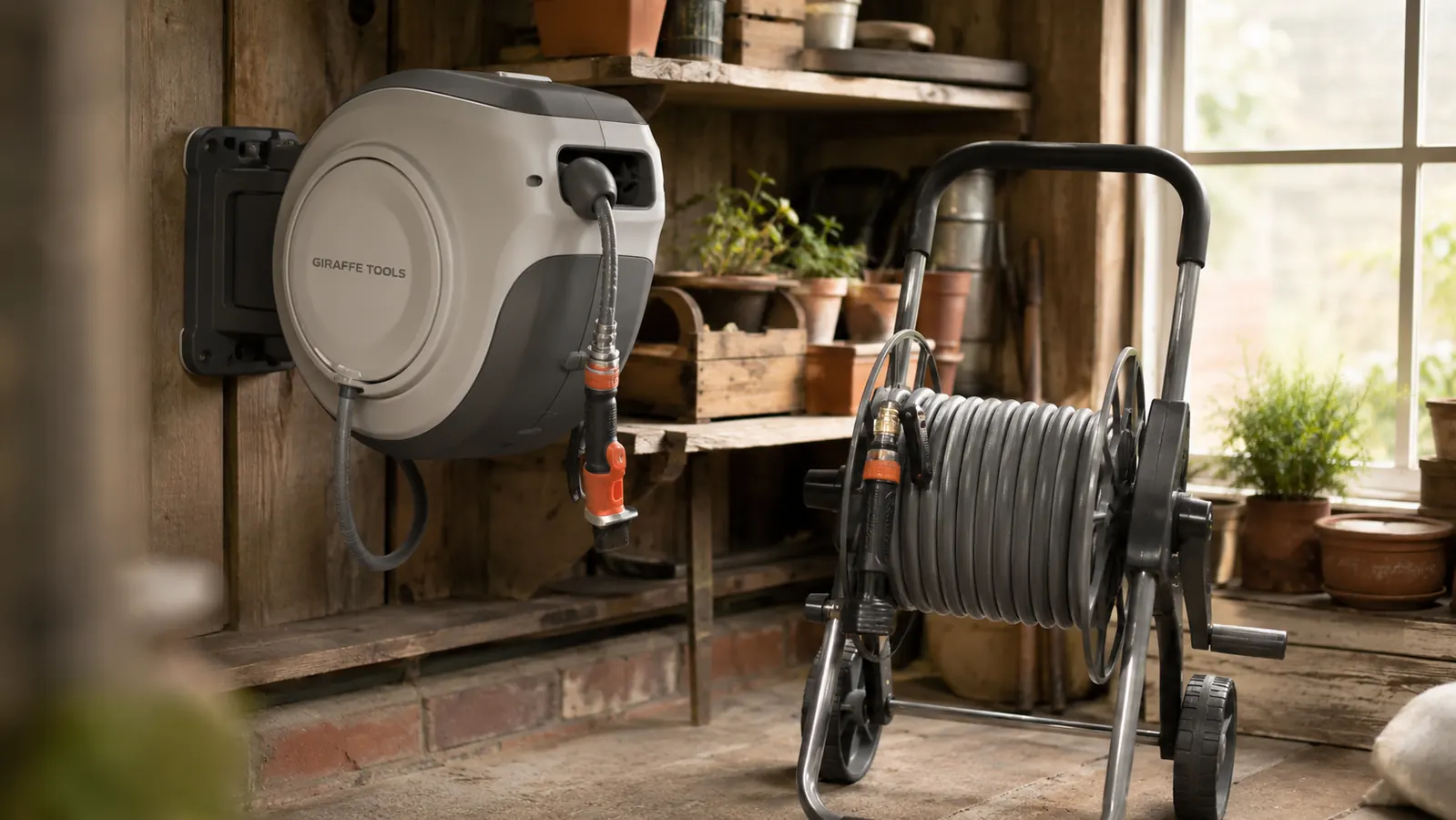
Skip this one if your mounting surface is vinyl siding, a hollow wood fence, a thin metal shed, or any wall where you cannot get solid structural backing behind your anchor points. Skip it if you want fast retraction, because slow is what you are getting by design. Skip it if you move frequently and do not want a wall-mount appliance you will leave behind. Skip it if your spigot is far from any usable wall, because the 6-foot leader hose is the only reach you have between the wall bracket and your water supply. And skip it if the installation itself is more physical work than your back or hands can take on a given afternoon, because the job is not light. For any of those situations, a quality portable hose cart with a hand-crank reel will serve you better without asking anything of your walls.
Right wall, right setup, done fighting with hose tangles? Here's where to check the Ayleid.
If the honest version of this reel still sounds like the right tool for your yard, check Amazon for the current price and read through the recent buyer reviews for anything that has changed since this article was written.
Amazon Check Today's Price on Amazon →