I want to be straight with you before we start: I own Grampa's Weeder. I've used it. There are things I genuinely like about it. But when a product has 67,837 reviews on Amazon, the five-star crowd writes the story, and the people who had a frustrating experience quietly return it and move on. This article is for the person trying to decide before they buy, not after. So I'm going to tell you the parts the marketing photos don't show.
The short version: Grampa's Weeder is genuinely good in the right conditions. Soft soil, recently rained on, dandelions and taprooted weeds, lawn or light garden bed. In those conditions it works about as well as anything I've tried at this price. But my backyard has two personalities. Half of it is decent loam that a spade sinks into cleanly. The other half is a clay-heavy strip along the south fence where water pools in spring and bakes to something resembling a brick patio by July. Grampa's Weeder and that clay strip have a difficult relationship, and I think you should know about it going in.
The Quick Verdict
A standout tool in soft or moist soil with taproot weeds, but not the right pick for hard clay, gravel beds, or fibrous spreading weeds.
Amazon Check Today's Price →Good tool for the right yard. Check the current price before you decide.
Grampa's Weeder is budget-friendly on Amazon. If your soil is generally workable and you're tired of bending to pull dandelions, it earns its spot. Just go in knowing the limits covered below.
Amazon Check Today's Price on Amazon →What the Marketing Gets Right (Because It Isn't All Bad News)
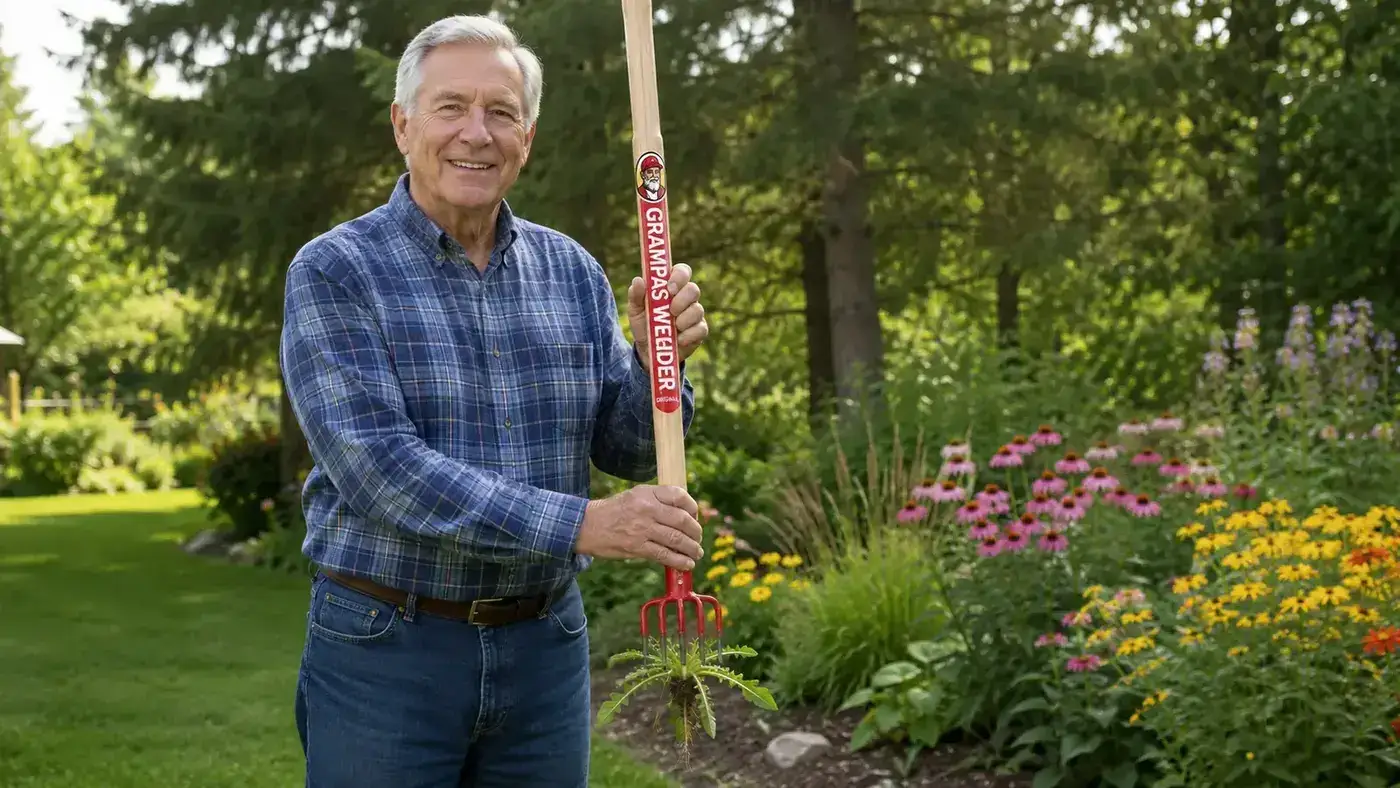
The main promise of Grampa's Weeder is that you can pull weeds without bending over, and that part is real. You step the four steel claws around the weed stem, lean the handle toward you, and the claw grips and levers the taproot up out of the ground. On a dandelion in decent soil, it works cleanly. The root comes out mostly intact, which matters because a broken taproot means the weed comes back in a few weeks with renewed enthusiasm.
The bamboo handle is long enough that most people can use it without any bending at all. I'm 68 and the ergonomic advantage of standing fully upright while weeding makes a real difference over the course of an hour. That part lives up to the description. The lever action, once you get the claws around the base, takes a surprising amount of the physical effort out of the pull. I'm not walking any of that back.
The four-claw steel head is also more durable than I expected at this price. I was prepared for it to bend on first contact with something stubborn. It hasn't bent on weeds. The ejection step, where you push down on the handle to pop the weed out of the claws rather than bending down to remove it by hand, works consistently and is a genuine quality-of-life upgrade over most stand-up weeder designs. That's real engineering for an affordable tool.
The Soil Problem Nobody Mentions Prominently
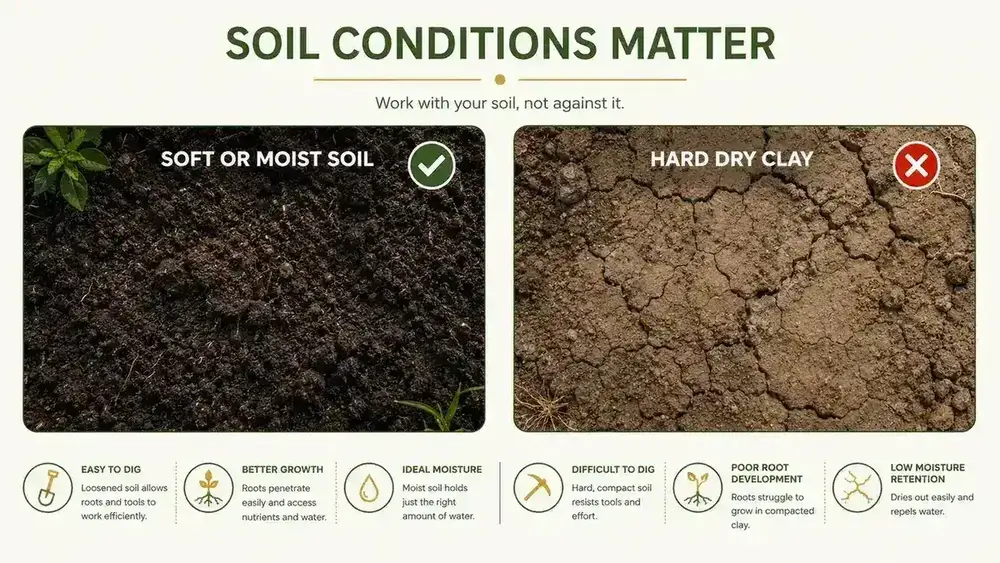
Here is the thing the five-star reviews skim past: this tool needs the soil's cooperation. In dry, compacted, or clay-heavy ground, the claw tines don't penetrate cleanly. They spread slightly on impact and skate off to the side of the weed stem instead of driving straight down around it. You end up pressing harder, rocking the tool back and forth to try to get purchase, and eventually either giving up or getting down on your knees anyway to dig it out by hand. That's the opposite of the experience the marketing promises.
The sweet spot is soil that has had rain within the last day or two, or a thorough watering the evening before. In that condition, the claws sink with very little effort and the lever action works exactly as shown in the demonstration photos. If you've read the five-star reviews and you're wondering why your experience isn't matching what they describe, this is almost certainly why. The glowing reviews were written by people who happened to be weeding in good soil conditions. The frustrated one-star reviews consistently come from people with clay-heavy or severely compacted lawns.
I now keep a note on my calendar: water the south bed the night before I plan to weed it. That one habit change made Grampa's Weeder work dramatically better over there. But I want you to know that workaround exists because the tool genuinely struggles without it. If you live somewhere with reliably dry summers and clay or adobe soil, this is a meaningful limitation.
The Bamboo Shaft: Natural Material, Real Trade-offs
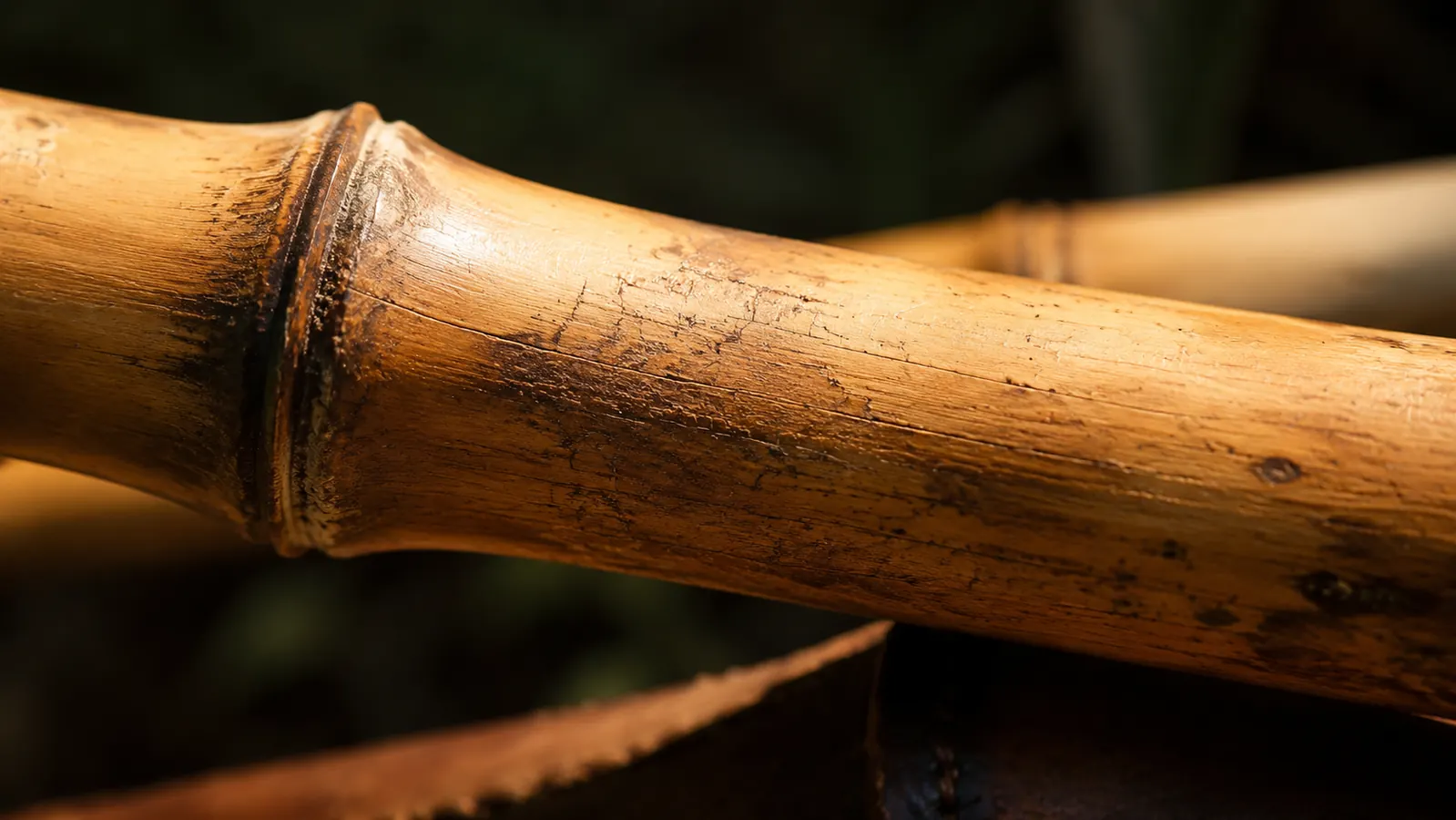
The bamboo handle is positioned as a selling point, and early on it is. It looks good, feels natural and warm in your hands, and has a quality presence that a thin powder-coated steel tube doesn't. I'm not arguing with any of that. But bamboo is a living material that was once a grass, and natural materials respond to outdoor conditions over time.
After two seasons, my bamboo shaft has developed surface checks. Those are fine cracks in the surface grain that appear where the lacquer finish has worn away at the grip points. None of them are structural and the tool feels solid. I have no reason to think it'll snap. But the surface is no longer smooth at the areas I handle most, and if you use it bare-handed on a warm day you'll feel the difference from when it was new. Light gardening gloves solve this completely. Still, a fiberglass or composite handle would not have this issue.
I'd suggest storing it indoors or in a covered shed rather than leaving it leaning against the fence through full rain and sun cycles. I left mine outside the first season and the shaft weathered faster than it needed to. That's on me, but it's the kind of thing I wish someone had told me. The tool comes with no care instructions at all, and bamboo does have a care schedule that steel doesn't.
The sweet spot is soil that has had rain within the last day or two. In those conditions the claws sink with almost no effort. The frustrated one-star reviews consistently come from people with clay-heavy or compacted lawns.
Claw Alignment Over Time
The four claws on the head are fixed, not adjustable. Out of the box, mine were symmetric and lined up cleanly around the pivot point. After a full season of heavy use, one of the four tines developed a slight outward splay, maybe two to three millimeters. On easy weeds in soft soil, this doesn't matter much. On tougher ones in harder ground, the asymmetric grip means the weed sometimes gets torqued sideways rather than levered straight up, which can snap the root near the surface rather than pulling it clean.
This is normal wear on a metal part that gets repeatedly driven into the ground and torqued. A light tap with a hammer brought mine back into rough alignment and I've done that once so far. Most buyers wouldn't know to do that, and the tool doesn't come with any guidance on maintenance. If claw durability matters to you, it's worth comparing gauge thickness between this and competing stand-up pullers before deciding.
Weed Types Where It Underperforms
Grampa's Weeder was built around one specific weed profile: a single, defined taproot with an upright stem. Dandelions are the textbook case, and it handles them better than anything I've tried at this price. Thistles, plantain, dock, and similar deep-rooted single-stem weeds also work well. The lever-and-pop sequence was designed around this shape: claw around the base, lean back, pop the root out. When the weed cooperates with that design, the whole thing feels almost elegant.
The tool struggles with weeds that don't fit that profile. Crabgrass, clover, creeping charlie, and most spreading or mat-forming weeds don't have a single central root to grab onto. The claws close on a portion of the plant and pull, but without a root anchor to pop out, you're mostly just tearing off the top growth. Those weeds are back in two weeks. I've tried to use Grampa's Weeder on the clover patch at the corner of my yard and it's essentially ineffective there. I use a hand cultivator or a stirrup hoe for that patch instead.
This isn't really a knock on the product design, which is honest about what it's built for. But if your weed problem is predominantly fibrous-root spreading weeds rather than taproot upright ones, you should know before you buy that this tool won't solve that problem.
Weight, Balance, and the Ejection Motion
The tool runs about 2.5 pounds, and at that weight most people can use it for a reasonable session without fatigue from the heft. Where I've noticed some accumulative strain is in the ejection motion itself. After you've levered the weed out, you push the handle forward and down to release the weed from the claws. That motion is mild enough on the first dozen weeds. On the fortieth or fiftieth, if you have any wrist or forearm stiffness, you'll feel it.
For a person with good grip and flexible wrists, this is a non-issue and they probably won't notice it at all. For someone dealing with arthritis in the hands or wrists, I'd encourage trying a shorter session before committing to a full afternoon. The standing posture is genuinely ergonomic; the ejection step is the one movement that has a repetitive-motion component. Taking a break every 20 minutes or so prevents it from becoming a problem.
What I Liked
- Eliminates bending for taproot weeds in workable or moist soil
- Claw ejection works consistently and removes the need to reach down
- Long handle suits taller users and those with limited range of motion
- Steel head is more durable than expected at this price
- Effective on dandelions, plantain, thistle, dock, and similar single-taproot weeds
Where It Falls Short
- Struggles noticeably in dry, hard-packed, or clay-heavy soil without pre-watering
- Bamboo shaft develops surface checks over time if stored outdoors
- Claw alignment drifts slightly after a season of heavy use in tough soil
- Not effective on fibrous-root weeds like crabgrass, clover, or creeping charlie
- Repeated ejection motion can fatigue arthritic wrists in longer sessions
Who This Is For
If your lawn or garden beds are dominated by taproot weeds, dandelions especially, and your soil is reasonably workable for most of the growing season, Grampa's Weeder is a solid buy at this price. The stand-up design is not a gimmick. It makes a real physical difference for people who can't or don't want to spend time on their knees or bent at the waist, and 67,000 reviews don't accumulate for a product that fails to deliver on its core promise. The tool is best suited to lawns and garden beds where you can water before a weeding session, and where taproot weeds are your main enemy.
It's also a strong pick if you want a low-maintenance option that costs less than premium alternatives and doesn't require any setup, batteries, or fuel. You pick it up, go out, and start pulling. That simplicity has real value.
Who Should Skip It
If your soil is heavy clay that bakes rock-hard by midsummer, I'd think twice. You'll spend a lot of effort trying to get the claws to bite and come away frustrated. A garden fork you can step on with your body weight, or a Cobrahead weeder where you can apply real downward force, will serve you better in clay. Grampa's Weeder trades mechanical depth for the stand-up convenience, and in very hard soil, that trade doesn't pay off.
Similarly, if crabgrass and spreading weeds are your primary problem rather than dandelions and taproots, this tool isn't engineered for your situation. And if severe wrist or hand arthritis makes any repeated lever motion a concern, the ejection step will limit your comfortable session length. In that case, a puller with a simpler straight-push ejection might be a better fit. The right tool is the one that matches both your weed type and your body, and Grampa's Weeder earns that match only when both conditions line up.
Right soil, right weed type: this thing works. Know your conditions before you order.
Grampa's Weeder is one of the most popular stand-up pullers on Amazon for a reason. If you've got a dandelion problem and workable soil, check today's price and see if it fits.
Amazon Check Today's Price on Amazon →