
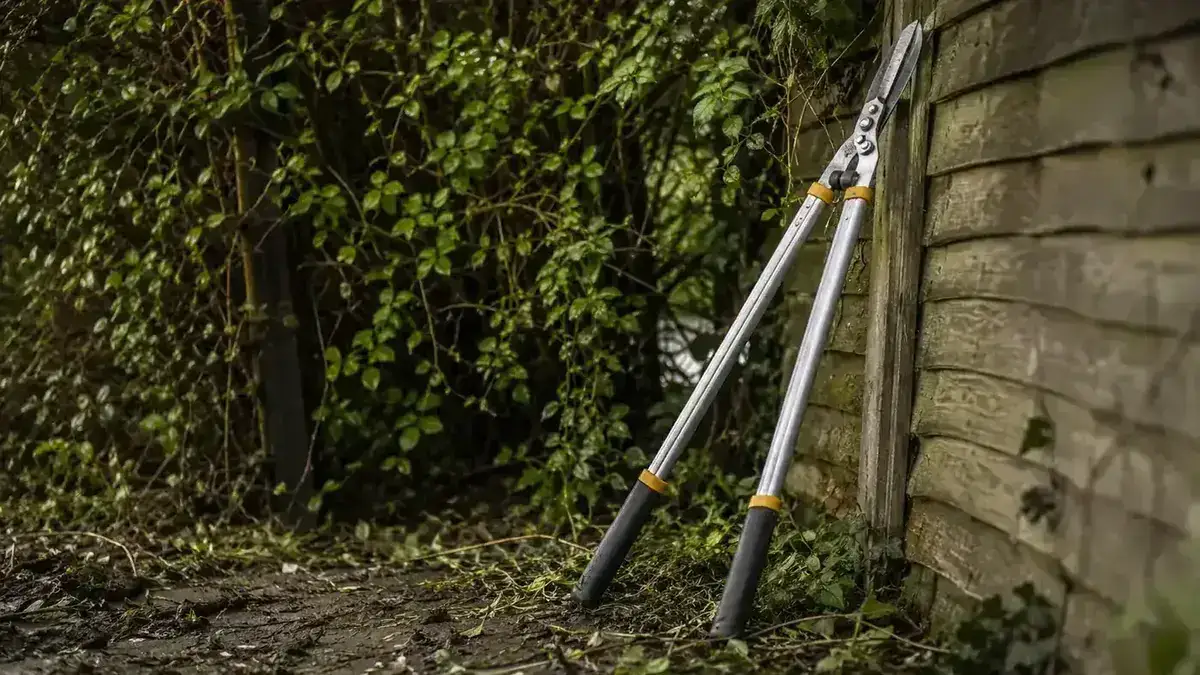
I want to tell you a thing that most garden tool reviews never say out loud. A lot of those five-star write-ups are written by people who used the tool twice in good weather on cooperative branches and then sat down to type. That's fine as far as it goes. But it doesn't tell you much about what happens in March when your hands are cold and stiff, the crape myrtle you've been ignoring is now a solid inch and a half of woody old growth, and you need the Spear & Jackson 8290RS ratchet loppers to actually perform.
I'm Ray Halloran. I've been gardening my own half-acre in central Florida since 1991. I've owned loppers that bent, loppers that rusted through at the pivot after one season, and at least two pairs that gave me the kind of hand cramp I still feel when the weather changes. I bought the Spear & Jackson 8290RS because the ratchet mechanism promised to cut the effort required, and after working these things through a full pruning season on crape myrtles, overgrown camellias, and one seriously neglected azalea hedge, I'm ready to give you the version nobody else bothered to write.
The Quick Verdict
A genuinely capable ratchet lopper for branches in the 3/4-inch to 1-1/4-inch range, but heavier and bulkier than most buyers expect, and the ratchet teaches you patience whether you want it to or not.
Amazon Check Today's Price →Tired of loppers that fight you harder than the branch does?
The Spear & Jackson 8290RS uses a ratcheting anvil mechanism that multiplies your grip strength across three biting stages. It won't fix bad technique, but it does mean you're not white-knuckling every cut.
Amazon Check Today's Price on Amazon →Let's Start With the Weight, Because Nobody Does
The spec sheet doesn't list a weight, and that omission does a lot of work in disguising a real issue. These loppers are not light. With the telescopic handles extended to their full 40.5 inches, you're holding something that feels closer to a full-size set of hedge shears than the nimble lopper you might have pictured. I weighed my pair at just over 4.5 pounds on my kitchen scale. That's a fact the product photos don't convey.
For most people under sixty with decent grip and shoulder strength, 4.5 pounds is not an issue over a twenty-minute pruning session. For me, at 67, with a right shoulder that hasn't forgiven me for a 2022 rotator cuff repair, it's the detail that determines whether I do the whole azalea row in one session or split it across two mornings. The weight is in the head, not the handles, which means you feel it as leverage strain on the wrists when the blades are extended out to reach a branch behind the shrub line. Worth knowing before you order.

The Ratchet Mechanism: What It Actually Does and What It Doesn't
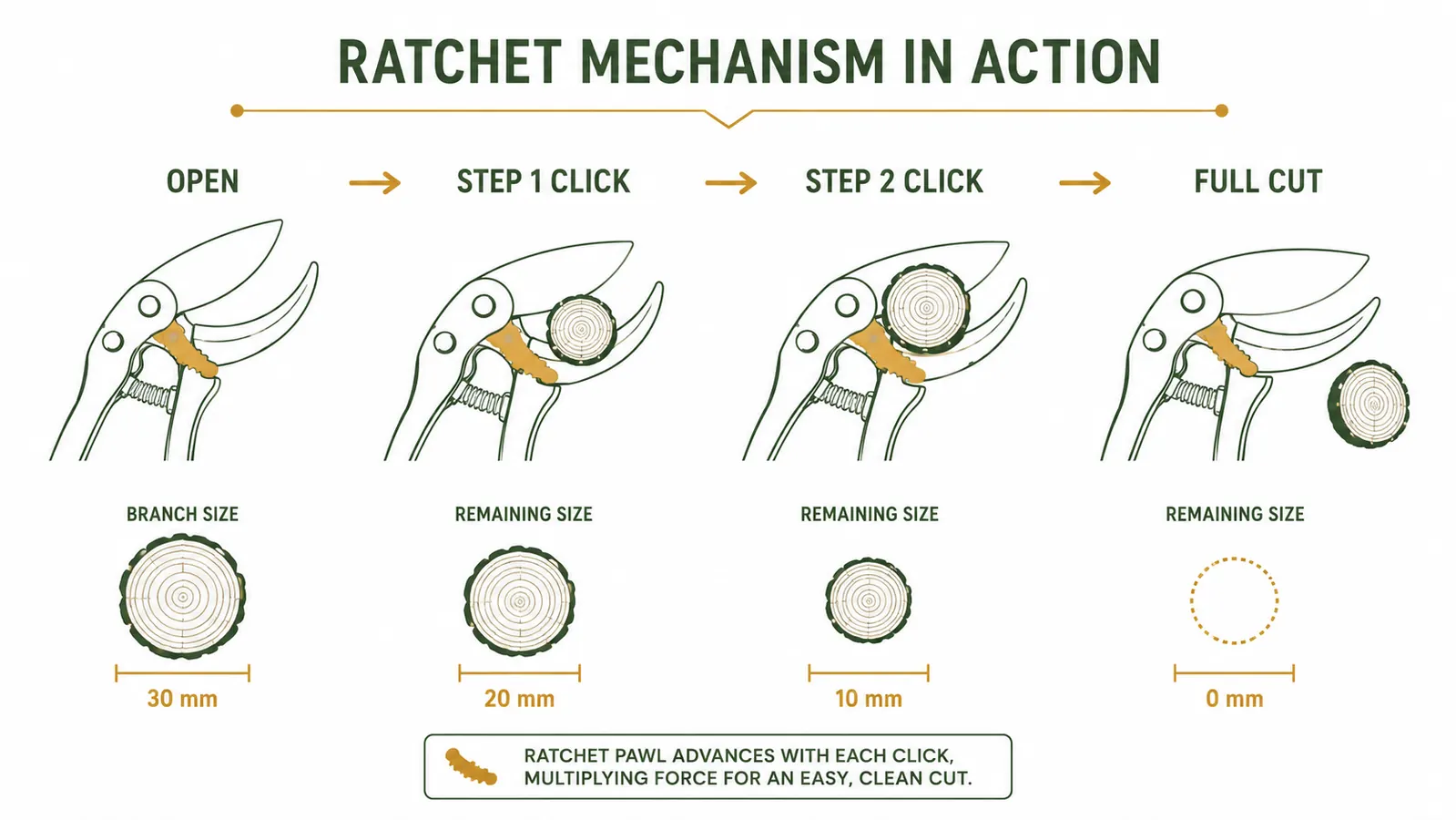
Here is the piece that most positive reviews describe inaccurately. They say the ratchet 'multiplies your cutting force.' That's true. What they don't say is how it multiplies it, and the how matters a great deal if you have limited patience or arthritis in your hands.
The ratchet works in stages. You squeeze the handles partially, the ratchet clicks and holds, then you release grip pressure, let the handles spring back slightly, and squeeze again from the new starting position. On a one-inch-diameter soft-wood branch, this typically takes two to three ratchet cycles to complete the cut. On a true one-and-a-quarter-inch section of old crape myrtle wood, you're sometimes making four to five short strokes. If you're used to bypass loppers where one long squeeze finishes the job, this rhythm takes getting used to. Some people adapt to it in an afternoon. Others find the stop-and-reset motion annoying enough to reconsider.
The mechanism is well-made. I haven't had a ratchet jam or skip in a full season of use, which puts these ahead of two cheaper ratchet tools I've tried that failed in under a month. But the design does ask something of you cognitively. You can't just bear down and push through. You have to work with the rhythm. That's a real characteristic of the tool, not a flaw, but reviewers who don't mention it are leaving out something important.
Handle Flex Under Load: A Small Thing That Adds Up
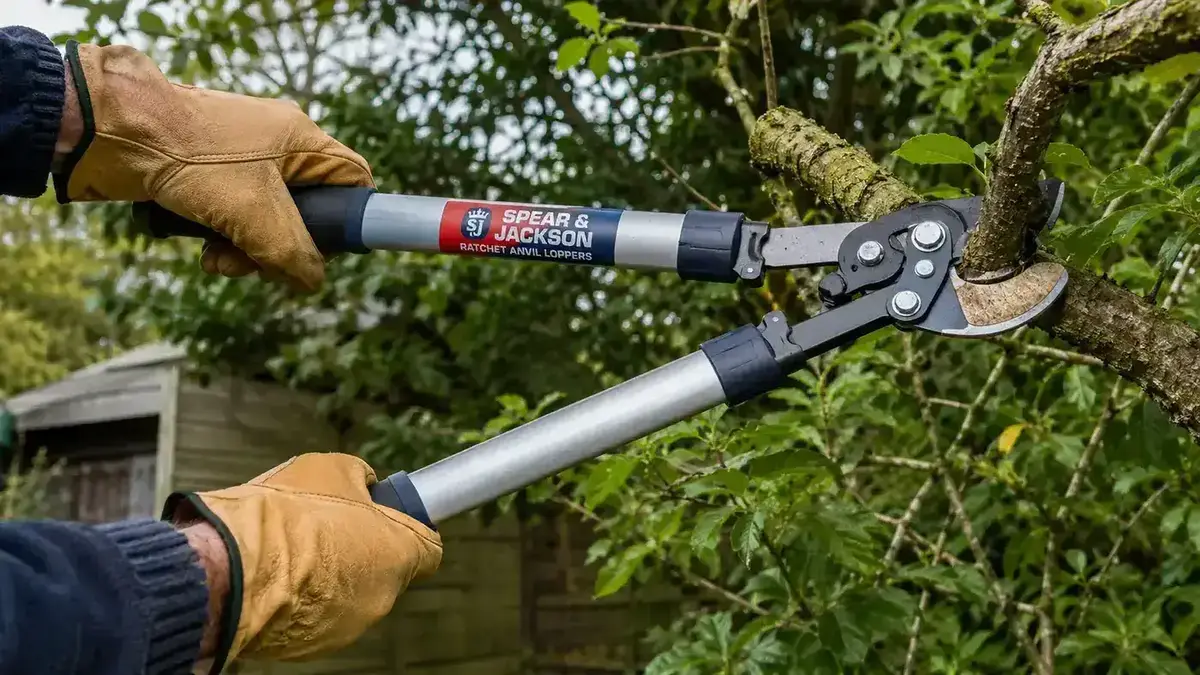
The telescopic handles on the 8290RS extend from roughly 26 inches to 40.5 inches. The extension mechanism is a locking collar you twist to fix in place. In my experience, it holds well for normal cuts. Where it doesn't hold as well is when you're making a difficult cut on a stubborn branch at full extension while also fighting a slight downward angle, which describes about a third of the actual branches in a real garden.
At full extension, the handles have a modest but noticeable flex. Not a structural flex that worries me about the tool breaking. More of a springy give that diffuses some of the force you're generating through the ratchet stroke. I've had cuts where I could feel maybe 15 percent of my effort going into handle flex rather than into the blade. This doesn't happen at the shorter handle setting. If your shrubs are in front of you and at waist height, you'll likely never notice it. If you're reaching up or across into a hedge, you might. This is the kind of thing that only shows up after a season.
The Branch Size Where These Loppers Genuinely Shine
I want to be fair here because these loppers are genuinely excellent at one specific job, and that job is probably the most common pruning job in a residential backyard. Branches between half an inch and one and a quarter inches in diameter, up to about a year or two of hardened growth, in the kind of shrubs most of us are actually dealing with: crape myrtles, camellias, azaleas, knock-out roses, and overgrown boxwood. In that sweet spot, the ratchet anvil mechanism absolutely delivers on its promise. I can make cuts in that range with a hand that has maybe sixty percent of its former grip strength, and the result is a clean, crisp cut that doesn't tear the bark.
The anvil blade, which cuts against a flat lower surface rather than the sliding bypass style, is a detail worth understanding. Anvil cuts crush the wood slightly at the cut face, which is why bypass loppers are the preference for delicate ornamentals where you want a truly clean wound. On crape myrtles and roses pruned hard in late winter, the slight crush of an anvil cut is a non-issue. On younger growth on a Japanese maple you're shaping? Use bypass. The 8290RS is not the tool for fine shaping work.
In the half-inch to one-and-a-quarter-inch range, these loppers make cuts I couldn't finish without them. Outside that range, I reach for something else.
Cold Mornings, Gloves, and Grip: The Part Nobody Tests
I do most of my serious pruning in late February and early March in central Florida, when temperatures are still in the mid-forties in the morning and I'm wearing a pair of leather-palm work gloves. The rubber-coated handles on the 8290RS are designed for grip, and they do the job bare-handed or in thin rubber gloves. With thicker leather-palm gloves, the grip diameter gets tight enough that my hand fatigues faster than it would with slightly larger handles. Not a dealbreaker, but a real consideration for anyone in a colder climate where thick winter gloves are a necessity, not a choice.
The spring-loaded opening mechanism, which pushes the handles back apart after each squeeze, is also stiffer than I expected when the tool is cold. In the first ten to fifteen cuts on a cold morning, the opening resistance is noticeable enough that I've found myself putting a little extra effort into pulling the handles back open. The spring loosens as the metal warms from use, and by the time I've made thirty cuts, it's fine. But for someone with significant hand or wrist arthritis, those first cold cuts can be uncomfortable enough to matter.
What Happens at the High End: Branches Over 1.5 Inches
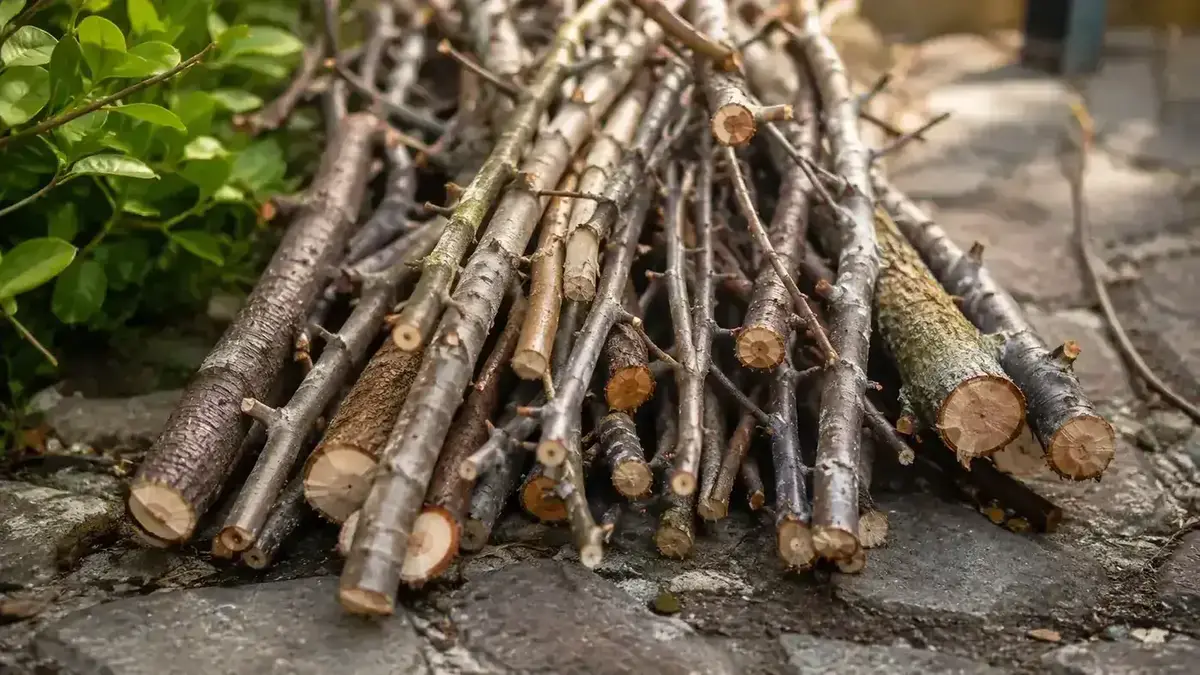
The 8290RS is rated for branches up to two inches. I've made cuts in the 1.5-inch to 1.75-inch range, and I want to be honest about the experience. It works. The ratchet gets through the branch, the cut is complete, the tool doesn't break. But at that diameter, especially in hardwood, you are working. Multiple ratchet cycles, real grip effort, and occasionally a moment where the blade feels like it's going to stop halfway through and you have to decide whether to force it or reposition. If your pruning regularly involves branches over 1.5 inches in thick old hardwood, a larger-capacity lopper or a folding saw is the more sensible tool. The 8290RS handles that range in an emergency. It's not optimized for it.
This is the honest version of the product description. The two-inch rating is technically accurate in the same way that a highway rated for 80,000-pound trucks can also technically support an aircraft carrier if you get creative about it. Possible. Not comfortable. Not what the tool is designed to do well every day.
What I Liked
- Ratchet mechanism delivers real force multiplication for branches in the 3/4- to 1-1/4-inch sweet spot
- 5,183 reviews and a 4.6 rating means quality control problems are rare, not common
- Telescopic handles reach into shrubs that would otherwise require awkward body positioning
- Blade quality is solid; stayed sharp through a full pruning season without touching a whetstone
- Anvil cut is clean and fast on crape myrtles and hardened rose canes, which is the main use case
Where It Falls Short
- Heavy at around 4.5 pounds; shoulder and wrist fatigue is real in sessions over 30 minutes
- Ratchet rhythm requires patience; not a one-squeeze-and-done tool
- Handle flex at full extension diffuses some cutting force on awkward-angle cuts
- Opening spring is stiff in cold weather; uncomfortable for arthritic hands in the first few minutes
- Anvil blade crushes wood slightly; wrong choice for fine shaping on ornamental trees
The Locking Collar After Repeated Use
One detail that showed up late in my testing season: the telescopic locking collar develops a little looseness over time. Not a failure, not a collapse, but a slight play that you feel when you're at full extension and making a hard cut. Mine first showed it around the four-month mark of regular weekly use. I tightened it down an extra quarter-turn and it's been fine since. It's something to check periodically, the same way you'd check the bolt tension on any tool with moving mechanical parts. Most buyers will never need to do anything about it. But if you feel a slight wobble at full extension after several months, that's the first place to look.
Who This Is For
The Spear & Jackson 8290RS is a strong buy for a specific kind of gardener. You have shrubs that have gotten away from you, branches in the three-quarter to one-and-a-quarter inch range that your hand pruners can't touch, and you need a tool that will let you finish the job without spending the rest of the afternoon with an ice pack on your forearm. You've accepted that this is going to take a bit of patience. You understand that an anvil cut is not a bypass cut and you know where it's appropriate to use one. You're comfortable with a tool that's on the heavier side in exchange for mechanical force multiplication. For that gardener, these loppers are genuinely worth the money. For more on how I've run these through two full growing seasons and how they compare side by side with the Fiskars PowerGear, see my long-term review of the Spear & Jackson 8290RS.
Who Should Skip It
Skip these if you have significant hand or wrist arthritis and cold-morning gardening is when you do most of your work. The stiff opening spring and the ratchet cycling will be hard on inflamed joints. Skip these if your primary pruning need is fine ornamental shaping, tree training, or Japanese maple work. The anvil blade is wrong for that. Skip these if your problem is mostly branches over 1.5 inches in dense old hardwood. You'll get there, but you'll work hard to get there, and a 25-inch pruning saw at half the price will do that job in ten seconds flat. And skip these if you genuinely need something lightweight. The force multiplication is real, but it doesn't undo the weight, and over a long session, that matters. If you want a full side-by-side comparison of these against the Fiskars PowerGear X before you decide, that breakdown lives in my Spear & Jackson vs Fiskars PowerGear comparison.
If your shrubs are in the sweet spot, these loppers really do cut the effort in half.
For branches in the three-quarter to one-and-a-quarter inch range, the ratchet mechanism does what it promises. Check current pricing and availability on Amazon before you decide.
Amazon Check Today's Price on Amazon →