

In the fall of 2022, my orthopedist told me I had a partial tear in my right rotator cuff. Not the kind that puts you flat on the table, but the kind where he looks at you and says, "You can manage this, but you need to stop loading that shoulder overhead." I nodded, asked a couple of questions, and then drove home thinking about my crape myrtle. It had grown about six feet too tall over the summer and was leaning toward the fence. I had three big azalea bushes that needed cutting back hard. And I had a row of forsythia along the back property line that was basically a hedge of tangled chaos. The season was not going to wait.
I tried my old bypass loppers about two weeks after the appointment. I made it through maybe four cuts on a branch the size of my thumb before the pain started. Those loppers take everything you've got, all in one squeeze. When you're fighting a stubborn branch, you end up torquing your whole arm, shoulder and all. I put the loppers down and went inside. I told my wife that pruning season might be done for me. She said, "Let's see what's out there." She is a practical woman.
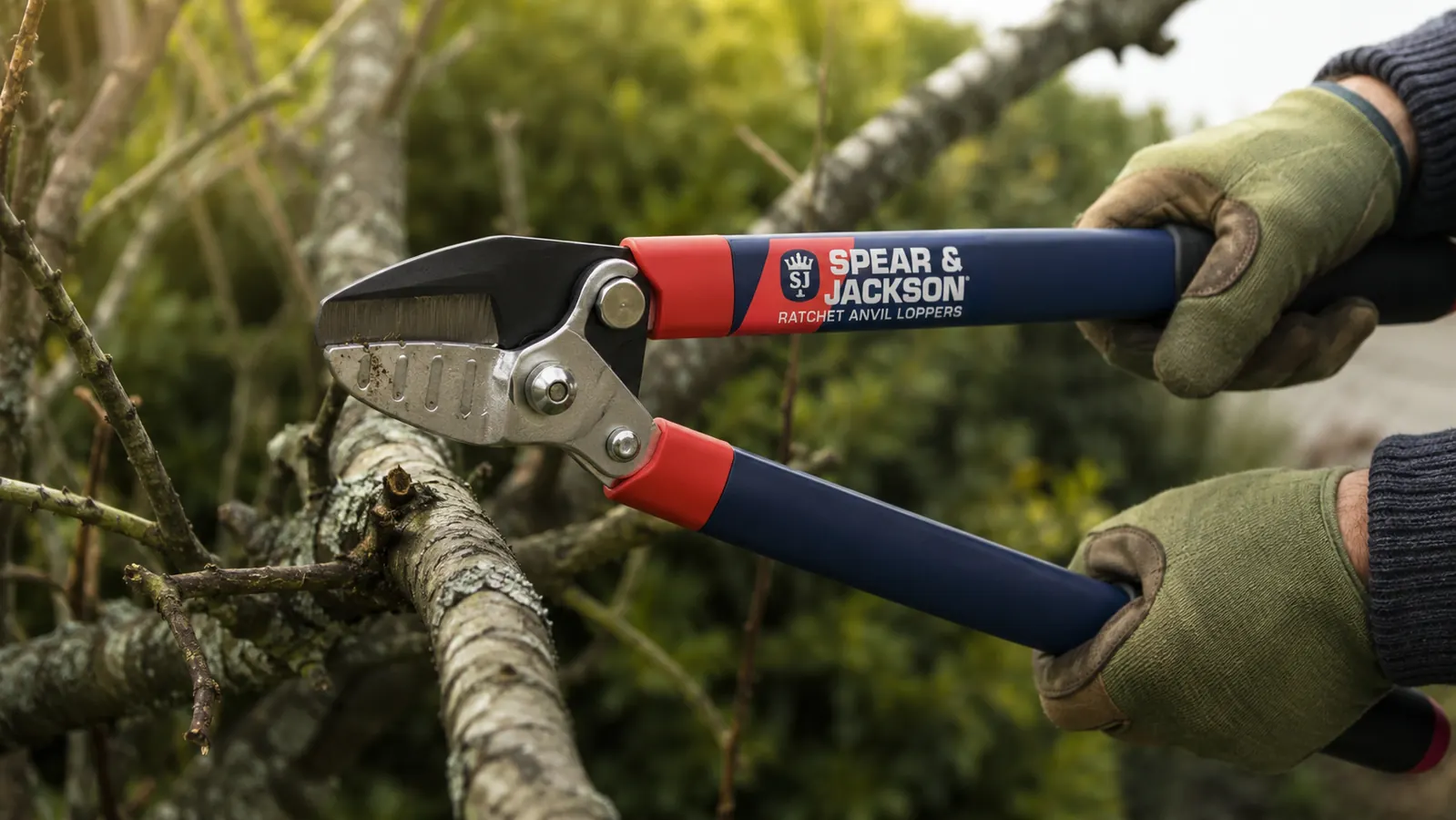
I started looking at ratchet loppers because a guy in my church had mentioned them a while back. His arthritis had gotten bad enough that regular loppers were useless, and he said the ratchet models let him work without white-knuckling every cut. The idea made sense to me. Instead of one long, hard squeeze, you take three or four short strokes. Each stroke advances the blade a little further through the wood. The shoulder load on any given squeeze is maybe a third of what a bypass lopper demands. I liked that math.
Instead of one long, hard squeeze, you take three or four short strokes. The shoulder load on any single squeeze is maybe a third of what a bypass lopper demands. I liked that math.
I ordered the Spear and Jackson 8290RS ratchet loppers. They showed up a couple of days later. First thing I noticed was the handles, which extend out to around 40 inches. That surprised me because I had not expected to care about reach. But those extra inches meant I could get into the crown of the crape myrtle on a low ladder without stretching my arm way up. That matters when overhead motion is on your restricted list. The ratchet head itself is solid, a good anvil design, blade comes down onto a flat lower jaw. Not what you'd use on delicate ornamentals where a clean bypass cut matters, but absolutely the right tool for hard pruning on woody shrubs, old branches, anything with real resistance.
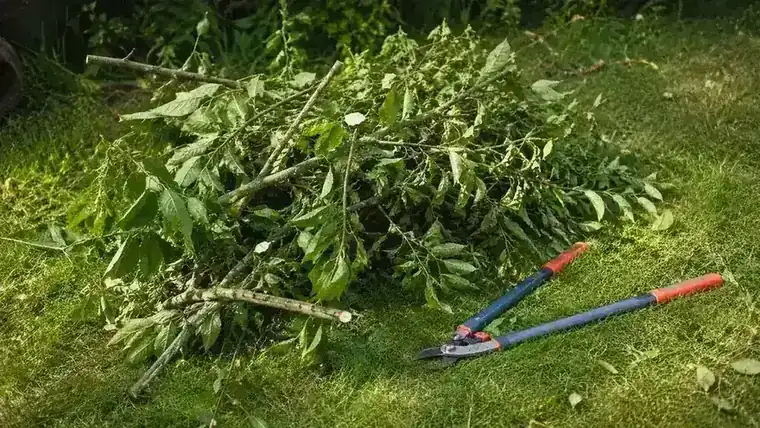
I started on the forsythia. First cut, I went slow, tested the mechanism. You open the loppers wide, set the blade, and squeeze. When you hit resistance, you ease off slightly and squeeze again. The ratchet catches, holds the blade position, and you take another bite. Within about three strokes the branch snapped. I stood there for a second because I kept waiting for the shoulder to complain. It did not. I made ten more cuts. Still fine. Not zero effort, I want to be honest about that. By the end of an hour I was tired. But it was the tiredness of having done actual work, not the hot-needle pain of having overloaded a bad joint.
Your shoulder shouldn't be the thing that ends your pruning season.
The Spear and Jackson 8290RS ratchet loppers have 4.6 stars across more than 5,000 reviews. The ratchet mechanism multiplies your cutting force so each squeeze is a fraction of the load of a standard lopper. Check the current price on Amazon.
Amazon Check Today's Price on Amazon →I want to give you the honest version, though. There are a couple of things to know. The ratchet mechanism adds weight. These are not featherweight loppers. If you have serious grip weakness rather than shoulder trouble, the weight of holding them open over your head for a long session can wear on your hands. I do not have that problem, so it was not an issue for me, but I have seen it mentioned by others who do. Also, the ratchet is slower than a straight bypass cut on easy branches. If you are trimming light green growth or thin new wood, a regular pair of loppers would be faster and you would not miss the ratchet at all. These earn their keep on the tough stuff, branches somewhere between thumb-width and about an inch and a half in diameter. That is where they are in their element.
I used them through that whole fall. Got the crape myrtle down to a reasonable shape, cleared the azaleas, and made the forsythia row actually look like something you planted on purpose. My shoulder held up. I went back for my follow-up in December and my orthopedist was pleasantly surprised. I did not tell him about the loppers specifically, but I am crediting them anyway.

The following spring I used them again on the same shrubs, now coming back with new growth. Still working the same way. The ratchet has not skipped or stiffened up. The blade still cuts clean. I cleaned them off at the start of each season with a little mineral oil on the joint and a wipe of the blade. That is it for maintenance. They have sat through one Georgia winter in my tool shed with no rust issues.
What I'd Tell You If We Were Sitting at My Kitchen Table
Here is the thing. If you've got a shoulder, a wrist, or a grip that isn't what it used to be, the instinct is to just start doing less in the garden. You put off the hard pruning. The shrubs get away from you. And then one spring you walk outside and the place looks like it's been abandoned for two years. I know that feeling and I didn't want it. The ratchet loppers are not magic, but they change the equation enough that I can keep going. That's worth something.
If you want to dig deeper into how these compare to regular bypass loppers on different branch sizes and what to expect over time, I have a full two-season review at the link below. And if the grip-strength question is your main concern rather than shoulder load, I wrote a piece specifically about why ratchet loppers are easier on your hands than standard bypass models. Both are worth a read before you buy. But if you are already standing in your backyard looking at overgrown shrubs and a shoulder that says no, you don't need a lot of convincing. You need a different tool.
Over 5,000 gardeners agree: the ratchet makes the difference.
The Spear and Jackson 8290RS. Telescoping handles to 40 inches, genuine ratchet anvil mechanism, built for hard pruning on thick woody shrubs. Rated 4.6 stars. Check current pricing and availability on Amazon.
Amazon Check Today's Price on Amazon →